717.845.7214
 York, PA


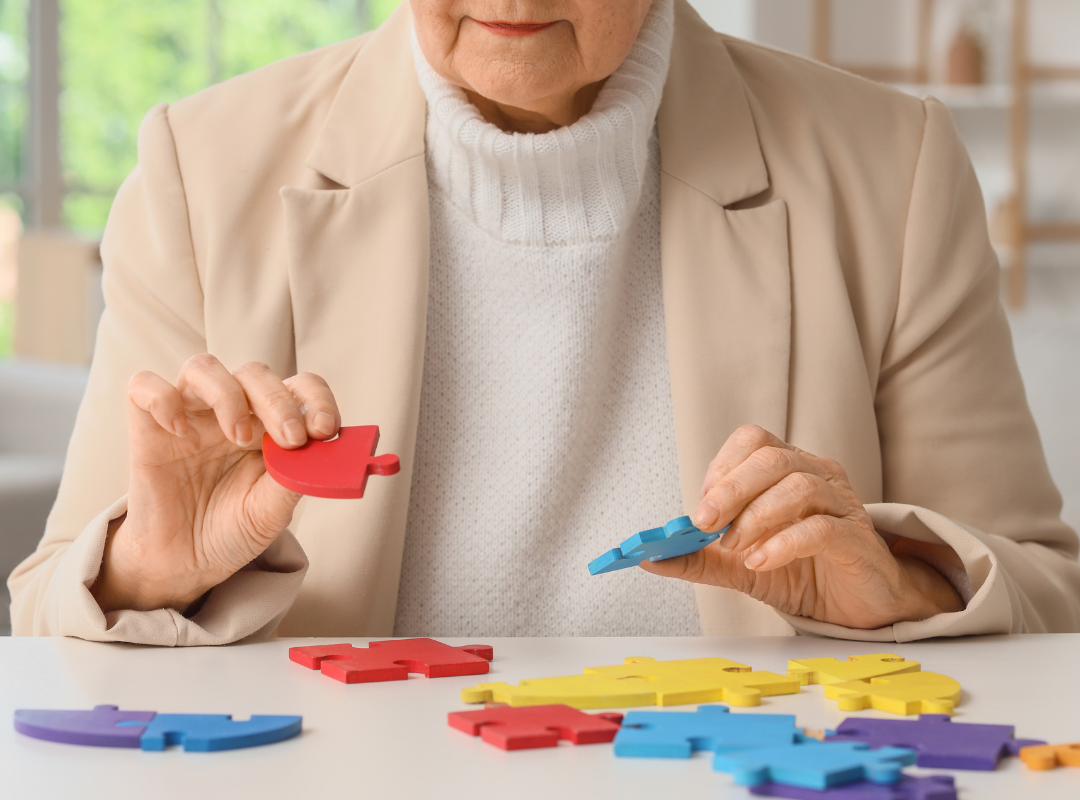
A familiar game can make time together feel easier and more natural for an older adult with dementia. The best choice is not necessarily the most stimulating or challenging game. It is one that fits the person’s interests, current abilities, comfort level, and willingness to participate.
Simple games for seniors with dementia can include matching cards, bingo, dominoes, familiar card games, easy board games, tossing games, picture matching, puzzles, and conversation-based games. Rules can often be simplified so the focus stays on enjoyment and connection rather than winning or remembering every step correctly.
What Makes a Game Easier for Someone With Dementia?
A game that once felt simple may become harder to follow as memory, attention, vision, hearing, or physical abilities change. That does not always mean the game has to be abandoned.
The Alzheimer’s Association guidance on choosing and adapting activities recommends considering the person’s existing skills, abilities, interests, and reactions to an activity. It also emphasizes enjoyment rather than achievement.
For games, that can mean choosing options with:
- Familiar rules or objects
- Few steps to remember
- Clear pictures, numbers, or colors
- Short turns
- Limited pressure to keep score
- Flexible rules
- Enough time to respond
- A way to participate without having to complete the entire game
Watch how the person responds. If they seem interested and comfortable, the game may be a good fit. If they become frustrated, tired, anxious, or disengaged, simplify the game or try something else.
Simple Games for Seniors With Dementia
There is no single game that will suit every older adult with dementia. Preferences and abilities vary, and the same person may enjoy different games on different days.
The following ideas can be adapted to make participation easier.
Matching Card Games
Matching games can be kept very simple by using a small number of cards with large, recognizable pictures.
Instead of placing many pairs face down, begin with four or six cards. If remembering where cards are located becomes difficult, place the cards face up and turn the activity into a visual matching game.
Images can feature familiar subjects such as animals, foods, flowers, household items, or seasonal objects.
The goal does not have to be completing every match. Finding a few pairs together may be enough.
Bingo
Bingo works well because each turn is short and the basic action is repeated.
Traditional number bingo may be familiar to many older adults, but the format can also be simplified. Depending on the person, cards might use:
- Large numbers
- Familiar pictures
- Colors
- Common objects
- Seasonal images
Make sure the card is easy to see and avoid rushing from one call to the next.
If marking the card independently is difficult, another person can help locate the square without taking over the experience.
Dominoes
Dominoes can be adapted in several ways.
A person who remembers traditional domino rules may enjoy playing normally. If scoring or strategy becomes difficult, simplify the game by focusing only on matching the number of dots.
Another option is to sort dominoes by number or create a line of matching pieces together.
Large dominoes with clear markings may be easier to handle and see.
Simple Card Games
Familiar card games can be good choices because the cards and basic routines may already be recognizable.
Possible options include Go Fish, War, or another game the person has played many times before.
To simplify play:
- Use fewer cards
- Remove complicated scoring
- Play with only two people
- Keep cards face up when useful
- Give one reminder at a time
- Demonstrate the next move instead of repeating several rules
If competition causes frustration, the cards can also be used for simple sorting by color, suit, or number.
Checkers or Simplified Board Games
A familiar board game may still be enjoyable even if every original rule is no longer necessary.
For checkers, for example, you might focus on taking turns and moving pieces rather than enforcing advanced rules or strategy.
Other board games can be shortened by using fewer pieces, skipping complicated spaces, or ending before the official finish if interest begins to fade.
The familiar board, pieces, or routine may be more important than playing the game exactly as written.
Toss-and-Target Games
Not every game needs to happen at a table.
A simple tossing game can involve throwing a soft ball or beanbag toward:
- A basket
- A large target
- A box
- Marked areas on the floor
Keep the distance comfortable and make the target easy enough to reach.
These games can work well for people who enjoy movement but may have difficulty following complex verbal instructions.
Physical ability and safety should always guide the setup.
Picture or Category Matching
Picture cards can also be used without traditional game rules.
Ask the person to pair related items, such as:
- Two flowers
- Two animals
- Foods that belong together
- Objects of the same color
- Items used for the same purpose
Another variation is sorting pictures into simple categories.
Keep the task open-ended. If the person groups something differently than expected, there is usually no need to correct them unless clarification is important to the activity.
Finish-the-Phrase Games
Familiar phrases can create a simple verbal game without requiring cards or equipment.
One person begins a common saying and leaves the final word open.
For example, a familiar phrase might be started and the other person can complete it if they wish.
This should remain conversational rather than feeling like a memory test. If the answer does not come easily, simply finish the phrase together and continue.
Simple Puzzles
Puzzles can work as game-style activities when the size and complexity fit the person.
Look for:
- Clear images
- Large pieces
- Strong contrast
- A manageable number of pieces
- Familiar subjects
A large puzzle with many similar pieces may create unnecessary frustration.
If completing the entire puzzle is difficult, offer a few pieces at a time or work together on one portion.
Conversation-Based Games
Some of the easiest games require very little memory.
Try questions based on preferences rather than facts, such as:
- Would you rather have coffee or tea?
- Would you choose the beach or the mountains?
- Which do you like better, cats or dogs?
- Would you rather listen to music or watch a movie?
There is no correct answer, which can reduce pressure.
These games can also lead naturally into conversation without requiring the person to recall specific dates, names, or events.
How to Adjust a Familiar Game as Abilities Change
A favorite game does not always need to be replaced when it becomes harder. Small changes can reduce the amount of information the person has to remember at once.
The National Institute on Aging guidance on adapting activities for people with Alzheimer’s disease recommends matching activities to what the person can currently do, helping them get started, watching for frustration, and prioritizing success and enjoyment.
For games, practical adjustments can include:
- Use fewer pieces or cards. A smaller playing area can make choices easier.
- Remove complicated scoring. Keep the basic turn-taking or matching part of the game.
- Give one instruction at a time. Long explanations can be difficult to process.
- Demonstrate the next step. Showing can sometimes be easier than explaining.
- Use visual cues. Large numbers, pictures, contrasting colors, or clearly arranged pieces may help.
- Allow more time. Avoid rushing to fill silence or complete a turn for the person.
- Play together instead of against each other. Cooperative play can remove unnecessary pressure.
- Shorten the game. Ten enjoyable minutes can be better than completing a long game.
- Let the person watch. Observing can still be a form of participation if that is what they prefer.
- Change the rules when needed. The original rulebook matters less than whether the person can comfortably take part.
Avoid repeatedly pointing out mistakes. If a rule no longer makes sense to the person, quietly adjust the game rather than turning the activity into a correction exercise.
One-on-One vs. Group Games for Seniors With Dementia
Both individual and group games can be appropriate. The better choice depends on the person and the environment.
One-on-One Games May Work Better When
A quieter game with one family member, friend, or caregiver may be easier when the person:
- Needs frequent reminders
- Has difficulty following several people at once
- Becomes distracted by noise
- Prefers familiar company
- Needs more time to take a turn
One-on-one play also makes it easier to adjust rules without drawing attention to the changes.
Group Games May Work Well When
Group games may be enjoyable when:
- Turns are easy to understand
- Instructions are brief
- The environment is not overwhelming
- Players can participate at different ability levels
- No one is pressured to perform
- The game allows people to join or step away easily
Bingo, tossing games, matching activities, and simple trivia or phrase games can sometimes be adapted for groups.
The goal is not to make every participant play in exactly the same way. Someone may answer questions, another person may simply watch, and another may enjoy handling the pieces.

Using Familiar Games During Family Visits
Families do not always need to plan something elaborate for a visit. A familiar deck of cards, dominoes, puzzle, or board game can provide a simple point of connection.
Start with games the person already knows or once enjoyed. Familiarity may make it easier to begin, but be prepared to simplify the game if following the original rules becomes difficult.
During the visit:
- Let conversation interrupt the game
- Avoid focusing heavily on the score
- Give gentle prompts when needed
- Do not quiz the person about forgotten rules
- Keep the game short if attention fades
- Allow the person to choose whether to continue
- Include children or grandchildren when the activity remains comfortable and easy to follow
A favorite game does not have to look exactly the way it did years ago to still provide an enjoyable shared experience.
When to Try a Different Game
Sometimes the best adjustment is simply to stop.
Consider switching activities if the person shows signs such as:
- Visible frustration
- Repeated difficulty understanding what to do
- Fatigue
- Loss of interest
- Anxiety or irritability
- Trouble seeing the materials
- Difficulty hearing instructions
- Difficulty holding or moving the pieces safely
You might simplify the current game, offer help, choose something more familiar, or try again another day.
A game is successful when the person is comfortable and engaged, not when every rule is followed or every round is completed.
Games and Engagement at Autumn House West
Games can be one part of a broader environment that supports social connection and meaningful participation.
At Autumn House West in York, Pennsylvania, residents have access to amenities that include game nights, activity rooms, and social spaces. Families exploring additional support for a loved one can also review the community’s levels of care, including Memory Care.
For a broader look at community life, explore the amenities at Autumn House West.
If you are looking for a different type of hands-on activity, you can also explore these craft activities for seniors.
Find Memory Care Support in York, PA
Choosing the right game can create an enjoyable moment, but families may also be considering what type of daily environment and support best fits a loved one’s changing needs.
Autumn House West offers Memory Care in York, Pennsylvania, along with spaces and activities designed for community engagement. If you are exploring senior living options for someone you care about, schedule a tour of Autumn House West to learn more about the community.
Frequently Asked Questions
What games are suitable for seniors with dementia?
Suitable games may include matching cards, bingo, dominoes, simple card games, familiar board games, tossing games, easy puzzles, picture matching, and conversation games.
The best option depends on the person’s current abilities, interests, physical comfort, and familiarity with the game. A simple version of a favorite game may be more enjoyable than introducing something completely new.
How can games be adjusted for different abilities?
Games can be simplified by reducing the number of pieces, removing complicated scoring, giving one instruction at a time, using larger visual cues, shortening the session, or playing cooperatively instead of competitively.
Adjust the game according to how the person responds rather than assuming one version will work every time.
Are group games appropriate for memory care residents?
Group games can be appropriate when the environment and game fit the individual participants.
Simple rules, manageable noise levels, clear turns, and flexible participation can make group play easier. Some people may prefer one-on-one activities or may enjoy watching rather than actively taking every turn.
What makes a game easy to follow and enjoy?
Games are generally easier to follow when they have familiar rules, few steps, clear visual information, short turns, and little pressure to remember complicated instructions or scores.
Enjoyment should take priority over playing perfectly.
How can families use familiar games during visits?
Families can bring or choose games the person has enjoyed before and simplify them as needed. Use fewer cards or pieces, reduce scoring, offer reminders, and let conversation take priority over completing the game.
If the person becomes tired or frustrated, change the activity rather than pushing to finish.
The staff is friendly, helpful and caring to anyone that comes into the building whether it’s a resident or their family.
Kimberly Burdette